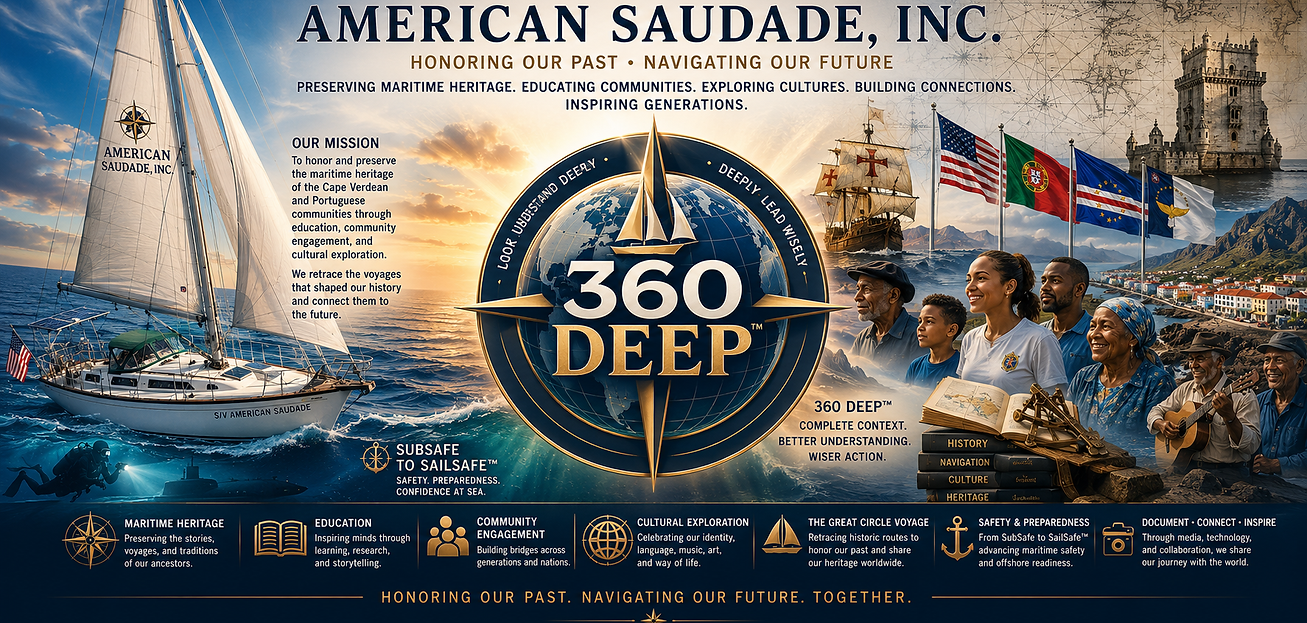
360-DEEP™: A Philosophy of Understanding
360-DEEP™ is a method of study, analysis, and critical thinking that challenges individuals to examine any subject from every possible angle before reaching a conclusion.
Developed as an educational philosophy, 360-DEEP teaches that no event, person, idea, movement, religion, philosophy, or historical occurrence exists in isolation. Every subject is influenced by a complex web of forces operating simultaneously within society and the world around it.
To go 360 degrees deep means to look beyond the surface and investigate the complete environment surrounding a subject, including:
-
Historical circumstances
-
Political conditions
-
Economic influences
-
Technological developments
-
Environmental factors
-
Cultural traditions
-
Religious beliefs
-
Social structures
-
Military considerations
-
Geographic realities
-
Human motivations
-
Global events occurring at the same time
The goal is not merely to understand what happened, but to understand why it happened, how it happened, and what surrounding factors may have influenced the outcome.
When studying a historical figure, 360-DEEP asks us to examine not only the individual's actions, but also the world in which they lived. Studying a political movement asks us to explore the economic pressures, social tensions, and competing ideas that shaped it. Examining a philosophy or religion encourages us to understand the conditions that gave rise to it and the needs it sought to address.
360-DEEP recognizes that history is interconnected. Economic changes influence politics. Politics influences culture. Culture influences religion. Technology influences society. Environmental conditions influence all of them. Understanding any one element requires understanding the others.
This philosophy promotes intellectual curiosity, disciplined research, critical thinking, and informed decision-making. It encourages students, leaders, and citizens to resist simplistic explanations and instead seek a comprehensive understanding of the world.
In essence, 360-DEEP™ is the pursuit of complete context.
"To understand anything fully, one must understand everything around it."
The Origin of 360-DEEP™
The idea behind 360-DEEP™ began during my years as an instructor with the Old Ironsides Battalion, where I had the privilege of teaching and working with NROTC midshipmen studying at Harvard University, the Massachusetts Institute of Technology (MIT), and Tufts University.
My approach to teaching was based on a simple belief: no person, event, decision, philosophy, conflict, or period of history can be fully understood in isolation.
I encouraged my students to go beyond the immediate subject in front of them. If we were studying a historical event, I wanted them to understand not only what happened, but what was happening around it. What were the political conditions? What economic pressures existed? What technologies were emerging? What environmental or geographic realities influenced decisions? What religious beliefs, cultural traditions, military considerations, and human motivations were at work?
I wanted them to look 360 degrees around the subject—and then go deep.
That approach became 360-DEEP™.
The philosophy was developed as a way of encouraging critical thinking, intellectual curiosity, and a deeper appreciation of context. It challenges us to move beyond simple explanations and examine the connections between history, politics, economics, environment, culture, religion, technology, geography, and human experience.
Today, 360-DEEP™ has become part of the educational philosophy of American Saudade, Inc. We use it to explore maritime history, cultural identity, migration, exploration, technology, international affairs, and the lives of the people whose experiences shaped the Atlantic world.
The subjects may change, but the principle remains the same:
Look around. Understand deeply. Lead wisely.
That is where 360-DEEP™ began—and it is the philosophy that continues to guide the journey today.

Research Resources
Useful links:
-
Library of Congress Primary Sources — strong for original documents, maps, photos, and teaching materials. (The Library of Congress)
-
National Archives Educator Resources — useful for primary sources, document analysis, and historical context. (National Archives)
-
DocsTeach — interactive primary-source teaching activities from the National Archives. (DocsTeach)
-
Smithsonian Learning Lab — digital museum objects, history, culture, and education resources. (learninglab.si.edu)
-
World Digital Library Collection — historical maps, books, manuscripts, newspapers, photographs, and cultural documents. (The Library of Congress)
-
World History Encyclopedia — accessible, fact-checked history articles, maps, timelines, and teaching resources. (World History Encyclopedia)
Call to Action
Help us go 360-DEEP.
Share your family history, suggest a topic, volunteer, follow our videos, and help American Saudade, Inc. preserve maritime heritage for future generations.